
Automation & Control
PLC programming, HMI/SCADA, and industrial automation systems that keep production running
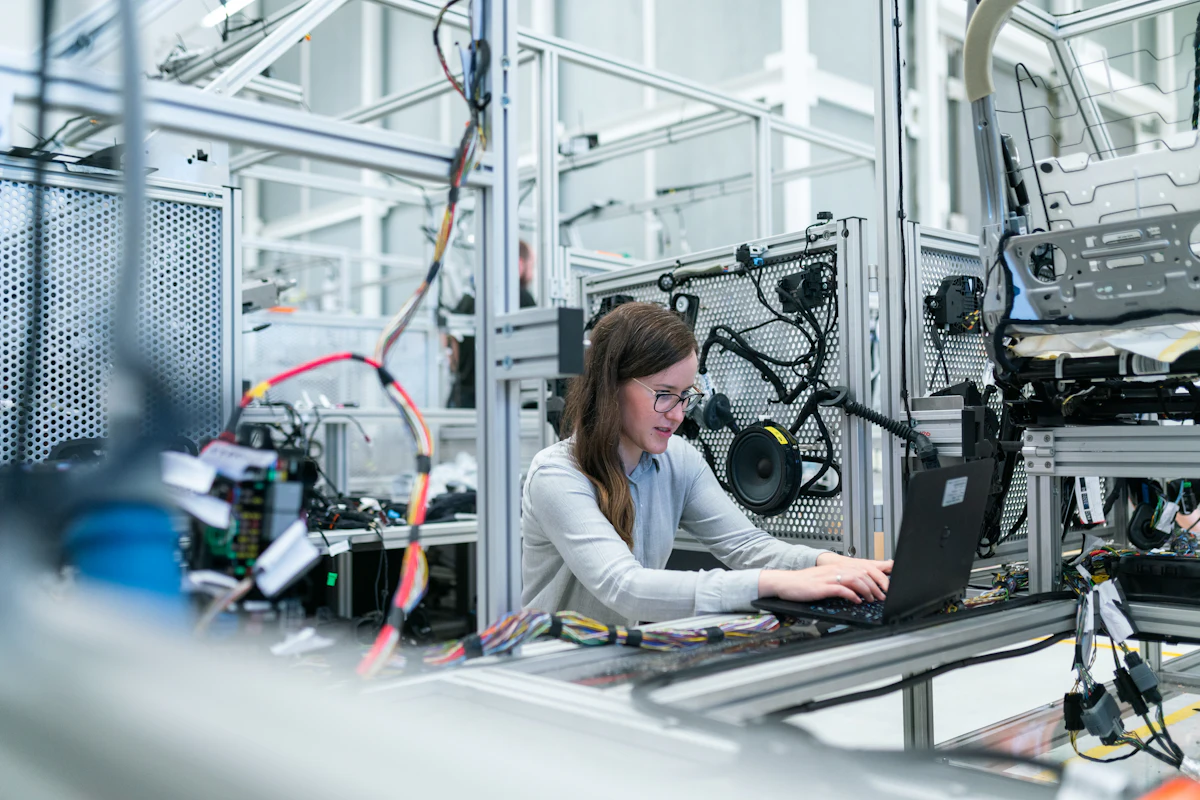
Industrial automation and control engineering covers the PLCs, HMIs, SCADA systems, drives and industrial networks that make production equipment run. Geek Engineering programs, troubleshoots, documents and modernizes these systems for manufacturers and machine builders in Chicagoland, Illinois and across the United States. Most projects begin by recovering an accurate picture of the installed system before anything is changed.
What a control system actually is
A control system is the combination of a programmable controller running the logic, an operator interface for the people using the machine, drives and motion hardware moving the process, a network tying them together, and safety circuits that must function independently of all of it. Changing any one of those affects the others, which is why controls work starts with understanding the installed system rather than with writing code.
Core services
What Automation & Control covers
- Process Automation & Control Systems
- PLC, HMI & SCADA Integration
- Electrical & Control System Design
Overview
What to expect from Automation & Control
Industrial control work rarely starts on a blank sheet. Most requests involve equipment that is already running production: a machine whose original programmer has moved on, a line that has been modified a dozen times without the drawings being updated, or a control platform that has quietly reached the end of its supported life. The engineering problem is usually not writing new logic — it is understanding what the installed system actually does before changing any part of it.
That shapes how a controls project is scoped. Work typically begins with a survey of the installed base: which processors, drives, HMIs and networks are present, what firmware and software revisions are in use, whether the running program matches the last saved copy, and where the safety circuits sit relative to the process logic. Recovering an accurate as-found picture is often the single most valuable deliverable, because it converts a system that only one person understood into one the plant's own team can maintain. From there, changes can be staged — logic modifications, HMI and SCADA revisions, drive and motion configuration, network segmentation, alarm rationalization — with each step tested against criteria agreed before the work starts.
The constraints that decide a controls project are mostly operational rather than technical. Available downtime windows govern what can be cut over and when. Spare-part availability and component obsolescence determine whether a platform is repaired or migrated. Existing safety functions must be preserved and re-validated rather than worked around. Applicable requirements — NEC, IEEE, UL 508A and IEC 61131-3 among them — are reviewed against the scope at hand. Sharing those constraints early, along with whatever drawings, program backups and I/O lists exist, produces a far more realistic scope than a description of the desired end state alone.
How we deliver
What every engagement includes
Geek Engineering applies the same delivery discipline across every service. Project-specific outcomes are published only with client permission.
Evidence without the marketing
Client-specific outcomes are shared only with written permission, so this page carries no invented statistics and no anonymous testimonials. What we can walk through in a scheduled technical conversation: sanitized drawings and code structure, representative panel photos, and the exact documentation standard your project would receive.
Request a capability reviewCited sources
Standards and references used in this work
Geek Engineering designs to applicable industry standards and vendor documentation. The following references are commonly used during Automation & Control engagements, applied as each scope requires. They are references, not certifications held.
- •National Electrical Code (NEC) — electrical design and panel safety
- •IEC 61131-3 — programmable controller programming standards
- •UL 508A — industrial control panel construction and safety
- •IEEE standards — industrial networks, power, and instrumentation
- •ISA-5.1 — instrumentation and P&ID documentation standards
- •Vendor technical manuals — Allen-Bradley, Siemens, Mitsubishi platform documentation
Automation & Control — Detailed Breakdown
Our automation engineers architect, program, and commission control systems that form the backbone of modern manufacturing. From PLC programming and HMI development to plant-wide SCADA networks, we deliver reliable, well-documented industrial automation for Chicago-area manufacturers and qualified U.S. projects — solutions that maximize uptime and operational visibility.
PLC, HMI, DCS & SCADA Systems
- PLC programming (Allen-Bradley, Siemens, Mitsubishi) in ladder logic, structured text, and function block per IEC 61131-3
- Custom HMI screen design with alarm management, trend logging, and role-based operator access controls
- Plant-wide SCADA and DCS architectures providing centralized monitoring, historian integration, and remote diagnostics
Industrial Automation Solutions
- Motion control, robotics cell integration (FANUC, ABB, KUKA), and conveyor sequencing for high-throughput lines
- Legacy system migration from SLC 500, PLC-5, and other obsolete platforms to modern ControlLogix or Siemens S7 ecosystems
- VFD parameterization, servo tuning, and network commissioning over EtherNet/IP, PROFINET, and Modbus TCP
Embedded Systems & Hardware Integration
- Custom PCB design, microcontroller firmware development (ARM, ESP32, STM32), and sensor interfacing
- IoT gateway integration for real-time telemetry collection, cloud dashboards, and predictive-maintenance analytics
- Hardware-in-the-loop (HIL) testing to validate embedded control logic before physical deployment
Automation & Control: what is needed, what you receive, and what drives cost
What is needed before work starts
| Input | Why it decides the scope | Acceptable substitute |
|---|---|---|
| PLC and HMI program backups | Confirms whether the running program matches the last saved copy | Upload from the live processor during the site visit |
| Electrical drawings | Establishes as-found I/O and power design | Photos of the panel and terminal strips |
| I/O list | Maps logic to physical devices | Extracted from the program if none exists |
| Safety system documentation | Safety functions must be preserved and re-validated, never worked around | Field survey of the safety circuit |
| Available downtime windows | Governs what can be cut over, and when | Shutdown calendar for the next two quarters |
| Spare-part availability | Decides repair vs migrate | Vendor lifecycle status for the installed platform |
What drives cost and timeline
- I/O count and device diversity, not processor choice, drives most of the effort.
- Unknowns in the installed system — an undocumented machine costs more to change than a documented one, and the difference is discovered during the work, not before.
- Downtime window length — the same cutover done in three nights instead of one weekend costs more and carries more risk.
Where this is not the right fit
This is engineering work, not staffing. Geek Engineering is not a good fit for supplying bodies by the hour to run someone else's process, for single-trade electrical installation work, or for commodity panel assembly at volume.
Last reviewed by Geek Engineering senior engineering review.
Buyer questions
Frequently Asked Questions
Can you support an existing PLC or SCADA system?
Yes. We troubleshoot, document, modify, and migrate existing Allen-Bradley, Siemens, Mitsubishi, HMI, SCADA, DCS, drive, motion, and industrial-network systems after reviewing the installed platform and project risk.
Do you provide onsite industrial automation support near Chicago?
Geek Engineering evaluates onsite work in Rosemont, Chicago, and surrounding Chicagoland communities. Availability depends on project scope, site requirements, schedule, travel, and the field work required.
Can you modernize obsolete controls without replacing the whole machine?
Often, yes. We assess the controls, field devices, safety requirements, interfaces, documentation, and downtime constraints, then propose a phased retrofit or full migration based on lifecycle risk.
Can you work on a PLC when the original program has been lost?
Yes. Where the processor is still running, the program can normally be uploaded from it; where it is not, the logic is reconstructed from the electrical drawings, the I/O list and observation of the machine's behaviour. Recovering an accurate as-found program and documenting it is often the most valuable single deliverable on an older machine.
How is a controls migration cut over without stopping production for a week?
By staging it. The new system is built and tested offline, I/O is transitioned in groups that map to physical sections of the machine, and each stage has a defined rollback. Cutover is planned against the actual shutdown windows available rather than assuming a continuous outage, and acceptance criteria are agreed before the first stage begins.
Do you replace safety systems as part of a controls upgrade?
Existing safety functions are preserved and re-validated as part of any controls change; they are never bypassed to simplify a migration. Where a safety system is itself obsolete, replacing it is scoped explicitly, with the applicable requirements reviewed against the machine and the change documented.
Which PLC platform should a plant standardise on?
The right answer is usually the platform your maintenance team can already support, for which spares are obtainable, and which the vendor will support for the life of the equipment. Those three constraints eliminate most options before performance comparisons matter. Geek Engineering works in Allen-Bradley, Siemens and Mitsubishi environments and treats platform choice as an engineering decision, not a preference.
Where this capability leads
Legacy PLC & SCADA migration
The packaged engagement for obsolete platforms.
Control System Modernization Blueprint
Assessment and phased plan before committing budget.
Controls troubleshooting & recovery
When something is broken now, or a project has stalled.
PLC & SCADA modernization checklist
What to prepare before a migration starts.
What drives automation project cost
The factors that move the number, and which you control.
Who should hire Geek Engineering
Where we fit, and the work we turn down.
Talk to an Engineer About Automation & Control
Send your schematics, code, or the problem in plain words. A senior engineer reviews it and responds with questions, a proposed approach, and the next concrete step.