
Software Development
Custom Software That Solves Real Business Problems
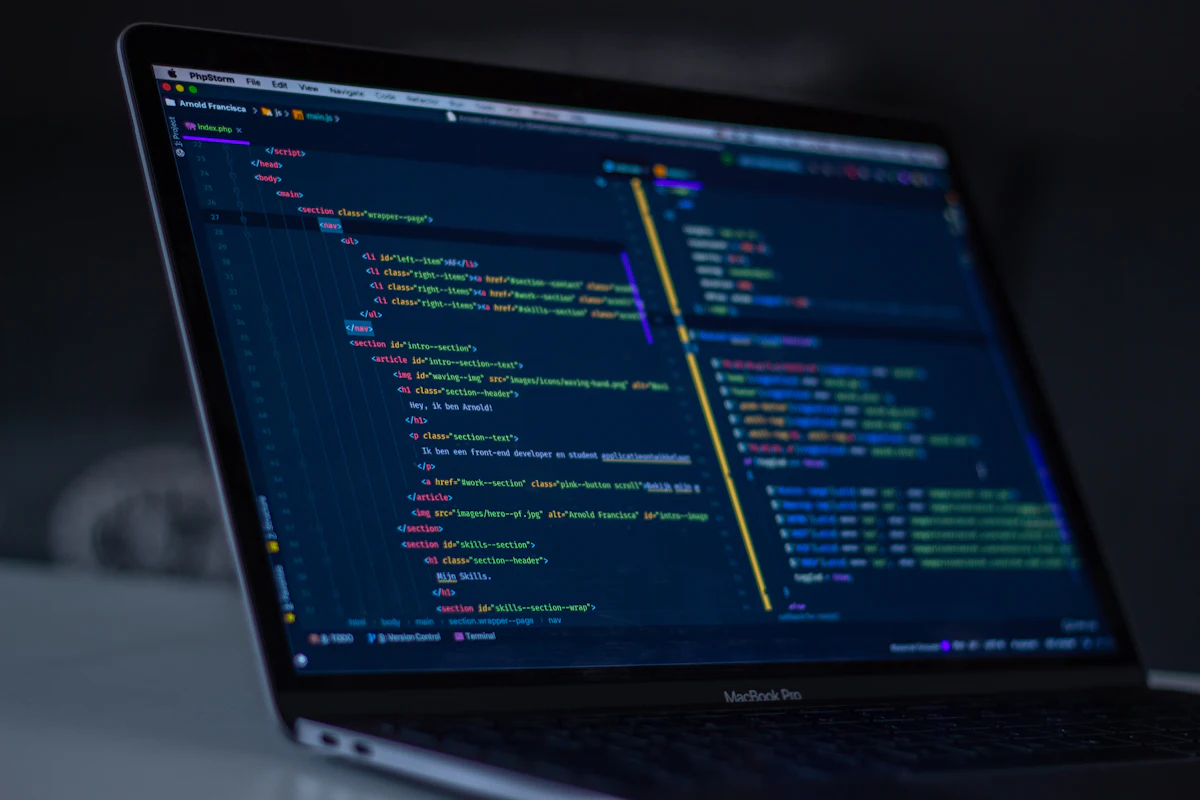
Industrial software connects equipment that reports tags, counts and fault codes to a business that needs orders, schedules, yields and traceability. Geek Engineering builds the web, mobile and desktop applications, data pipelines, dashboards and integrations that carry plant data into usable form, and connects them to ERP, MES and maintenance systems where required.
Why industrial software is an integration problem first
Plant-floor data sources are not databases. Connections drop, equipment is power-cycled mid-write, tag names change when a machine is modified, and timestamps arrive from clocks that disagree. Buffering, reconnection, validation and explicit handling of missing data decide whether a finished application is trusted or quietly abandoned — more than any choice of framework does.
Core services
What Software Development covers
- Website & Web Application Development
- Mobile Apps & Custom Software
- AI Applications & Business Automation
Overview
What to expect from Software Development
Industrial software sits between equipment that speaks one language and a business that speaks another. A machine emits tags, counts and fault codes; a business needs orders, schedules, yields and traceability records. Most projects in this area are integration problems first and application problems second: reading data reliably from controls, historians and instrumentation, giving it a stable structure, and presenting it to the people who act on it — through a web or mobile application, a dashboard, a report, or an interface into ERP, MES or a maintenance system.
The reliability of that data path decides whether the finished application is used or abandoned. Plant-floor sources are not databases: connections drop, equipment is power-cycled mid-write, tag names change when a machine is modified, and timestamps arrive from clocks that disagree. Buffering, reconnection, validation and clear handling of missing data are designed in from the start rather than added after the first gap appears in a report. Equally important is agreeing what each number means before it is displayed — a definition of downtime or a unit count that differs between the software and the production meeting will discredit the whole system, however well it is built.
Longevity is the other consideration worth settling early. Industrial applications tend to outlive the project that created them, so credentials and configuration are kept out of the code, environments are reproducible, and the deployment path and its dependencies are documented. Access is scoped to what each role needs, and anything reaching the plant network is designed with segmentation in mind rather than assuming a flat, trusted network. A useful software request states the decision the software is meant to support, the systems it must read from and write to, who uses it and in what environment, and any security or compliance constraints that apply.
How we deliver
What every engagement includes
Geek Engineering applies the same delivery discipline across every service. Project-specific outcomes are published only with client permission.
Evidence without the marketing
Client-specific outcomes are shared only with written permission, so this page carries no invented statistics and no anonymous testimonials. What we can walk through in a scheduled technical conversation: sanitized drawings and code structure, representative panel photos, and the exact documentation standard your project would receive.
Request a capability reviewCited sources
Standards and references used in this work
Geek Engineering designs to applicable industry standards and vendor documentation. The following references are commonly used during Software Development engagements, applied as each scope requires. They are references, not certifications held.
- •OWASP guidance — secure web application development
- •WCAG 2.2 — web content accessibility
- •API and data-exchange conventions used with connected equipment
- •Cloud platform documentation — AWS, Azure, or GCP deployment guidance
- •Vendor technical manuals — React, Next.js, TypeScript, React Native, Flutter
Software Development — Detailed Breakdown
We build performant, scalable software from the ground up—web platforms, mobile apps, desktop tools, and industrial integrations. Our full-cycle development approach means a single team handles discovery, architecture, coding, testing, deployment, and ongoing support.
Custom Websites & Web Applications
- Responsive, SEO-optimized corporate sites and progressive web apps built with React, Next.js, and TypeScript
- Enterprise dashboards, CRUD portals, and real-time data visualization tools with secure authentication and role-based access
- Headless CMS integrations, API-first architectures, and cloud-native deployments on AWS, Azure, or GCP
Mobile Apps (iOS & Android)
- Cross-platform mobile applications using React Native or Flutter for faster delivery across iOS and Android
- Native Swift and Kotlin development for performance-critical use cases such as industrial field-service apps
- App Store submission management, CI/CD pipelines, and post-launch analytics integration
Desktop Applications
- Standalone desktop tools for equipment monitoring, production tracking, and executive-level KPI dashboards
- Electron and .NET-based applications with offline-first capability for shop-floor environments
- Direct hardware interfacing via USB, serial, and OPC-UA for seamless machine-to-software communication
Full-Cycle Development
- Requirements gathering, UX wireframing, agile sprints, automated testing, and production deployment under one contract
- Ongoing maintenance retainers, performance audits, and security hardening for mission-critical applications
Software Development: what is needed, what you receive, and what drives cost
Agree what the numbers mean before displaying them
| Metric | Question that must be answered first | Consequence of skipping it |
|---|---|---|
| Downtime | Does a 90-second stop count? Does changeover? | Dashboard disagrees with the production meeting |
| Unit count | Counted at infeed or at good-parts-out? | Yield calculations are wrong and nobody can say why |
| Shift boundary | Clock time or last part of the shift? | Totals never reconcile across shifts |
| Availability | Against scheduled time or calendar time? | Two departments quote different OEE for the same line |
| Timestamp | Whose clock — PLC, historian or server? | Events cannot be correlated across systems |
What drives cost and timeline
- Number of distinct data sources, and whether each has a documented interface.
- Whether the metric definitions already exist or have to be negotiated between departments.
- Security and network constraints — anything crossing the plant/business boundary needs a designed path, not an exception in a firewall.
Where this is not the right fit
Geek Engineering builds industrial and business software as engineered systems. It is not a good fit for high-volume consumer app development, marketing website production, or projects where the requirement is a fixed price before the data sources have been examined.
Last reviewed by Geek Engineering senior engineering review.
Buyer questions
Frequently Asked Questions
Can custom software connect to industrial equipment?
Yes. We build integrations using OPC UA, industrial protocols, APIs, databases, edge gateways, and approved cloud services to connect equipment data with dashboards and business applications.
Do you build web, mobile, and desktop applications?
Yes. We design and develop responsive websites, secure web platforms, iOS and Android applications, desktop tools, APIs, databases, and real-time industrial dashboards.
Can you modernize an existing application?
Yes. We begin with architecture, security, data, integrations, and user-workflow discovery, then recommend incremental modernization or replacement based on risk and business value.
Can you read data out of our PLCs without disturbing production?
Normally yes. Data is read through the interfaces the controller already exposes, at a polling rate the processor can carry, and reads are validated against a test before they run continuously. Any change that would affect the running program — adding tags, changing scan behaviour — is scoped and scheduled explicitly rather than made during a data project.
What happens to the software after the project ends?
Source code, deployment documentation and configuration are handed over, credentials are kept out of the code, and environments are reproducible. Industrial applications routinely outlive the project that created them, so the deployment path and its dependencies are documented at handover rather than living in one person's memory.
Do you host the application, or do we?
Either, and the decision should be made on what has to survive an internet outage. Anything the plant depends on minute to minute belongs on-site; reporting, analytics and cross-site aggregation are usually better hosted centrally. The dependency between the two is designed explicitly so behaviour during a link failure is known in advance.
Where this capability leads
MES, historian & ERP integration
Getting plant data into the systems that run the business.
Connected factory data & AI pilot
Once the data is trustworthy, one measured pilot.
Build or buy, and what software costs
How to judge a build-versus-buy decision before spending.
How project evidence is shared
Code structure and screen layouts, shared under NDA.
Who should hire Geek Engineering
Where we fit, and the work we turn down.
Talk to an Engineer About Software Development
Send your schematics, code, or the problem in plain words. A senior engineer reviews it and responds with questions, a proposed approach, and the next concrete step.